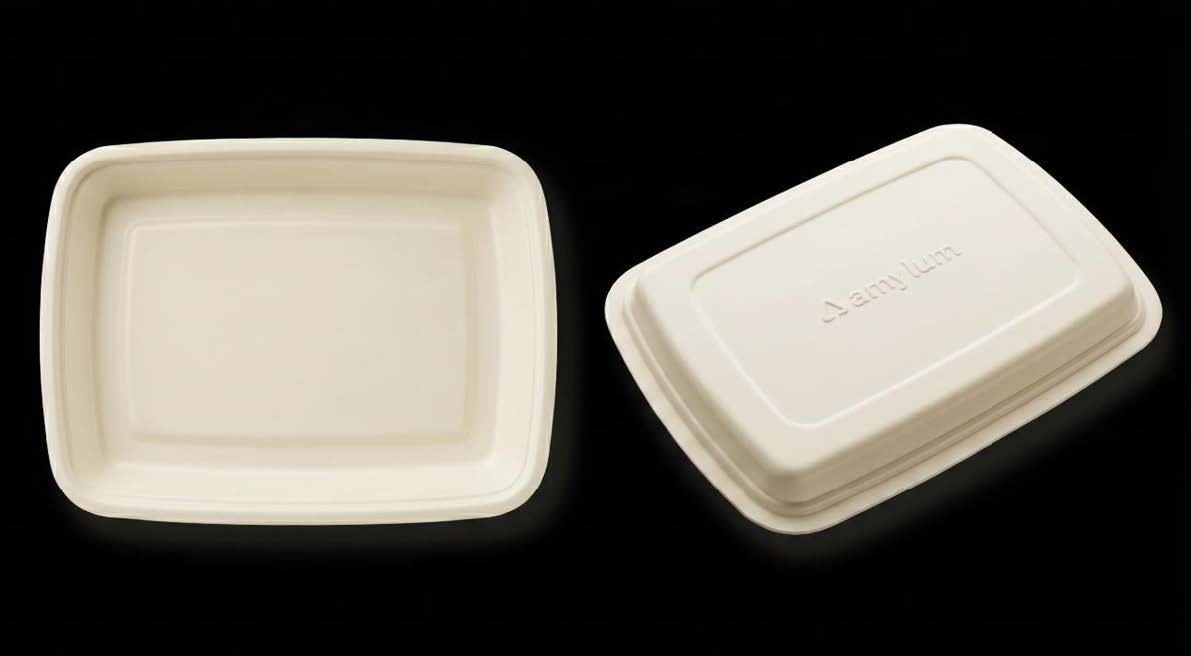
Amylum has achieved a world-first breakthrough: a fully compostable PLA foam food container with a 15–20x expansion ratio — a milestone the industry has pursued for years but failed to commercialize at scale.
Why This Matters
The global packaging industry is undergoing a forced transition:
- Regulatory pressure (EPR, PS bans, circular economy laws) is accelerating
- Major brands are mandated to shift away from plastics
- Yet alternatives have historically failed due to cost, performance, or scalability
Amylum solves all three simultaneously.
Core Investment Thesis
1. Cost Curve Advantage
High expansion (15–20x) dramatically reduces material input per unit
→ structural cost-down at scale
2. Secured Demand + Regulatory Pull
- Immediate applicability in food packaging verticals under regulatory pressure
- Natural demand driven by compliance, not preference
3. Scalable Business Model
- Owned production (early-stage margin capture)
- Strategic partnerships (rapid adoption)
- Licensing (capital-light global scale)
How This Behaves Financially
At scale, this is not venture-like.
This behaves like infrastructure.
- Predictable volume (regulated demand)
- Expanding margins (cost-down curve)
- Repeatable cash flow
Why Now
- Regulatory environment has crossed point of no return
- Large buyers (CPG, retail, food) are actively seeking viable substitutes
- No incumbent solution has solved cost + performance + manufacturability simultaneously
Amylum is entering at the exact moment the market is structurally ready.
CEO Commentary – Andrew Kim
“The world doesn’t have a plastic problem — it has a scale problem. Many alternatives exist, but they failed where it matters most:
In real-world economics, manufacturing, and supply chains.
What we’ve built is not just a material — it’s a system designed to scale.
This is not about a better alternative. It’s about defining the next standard.
Technology only matters when it is repeatable, scalable, and inevitable.
This is not the finish line. This is where the new standard begins.”